Back Translate is an optional feature for the Consultant Check stage that can be turned on in the Workflow Configuration settings. It allows a user to translate drafts from the target language into the language that the consultants language.
Back translate has multiple options that can be turned on/off including: Passage Back Translate, Segment Back Translate, and 2-Step Back-translate. Please see the Configure Workflow - Settings for Stages article for additional details.
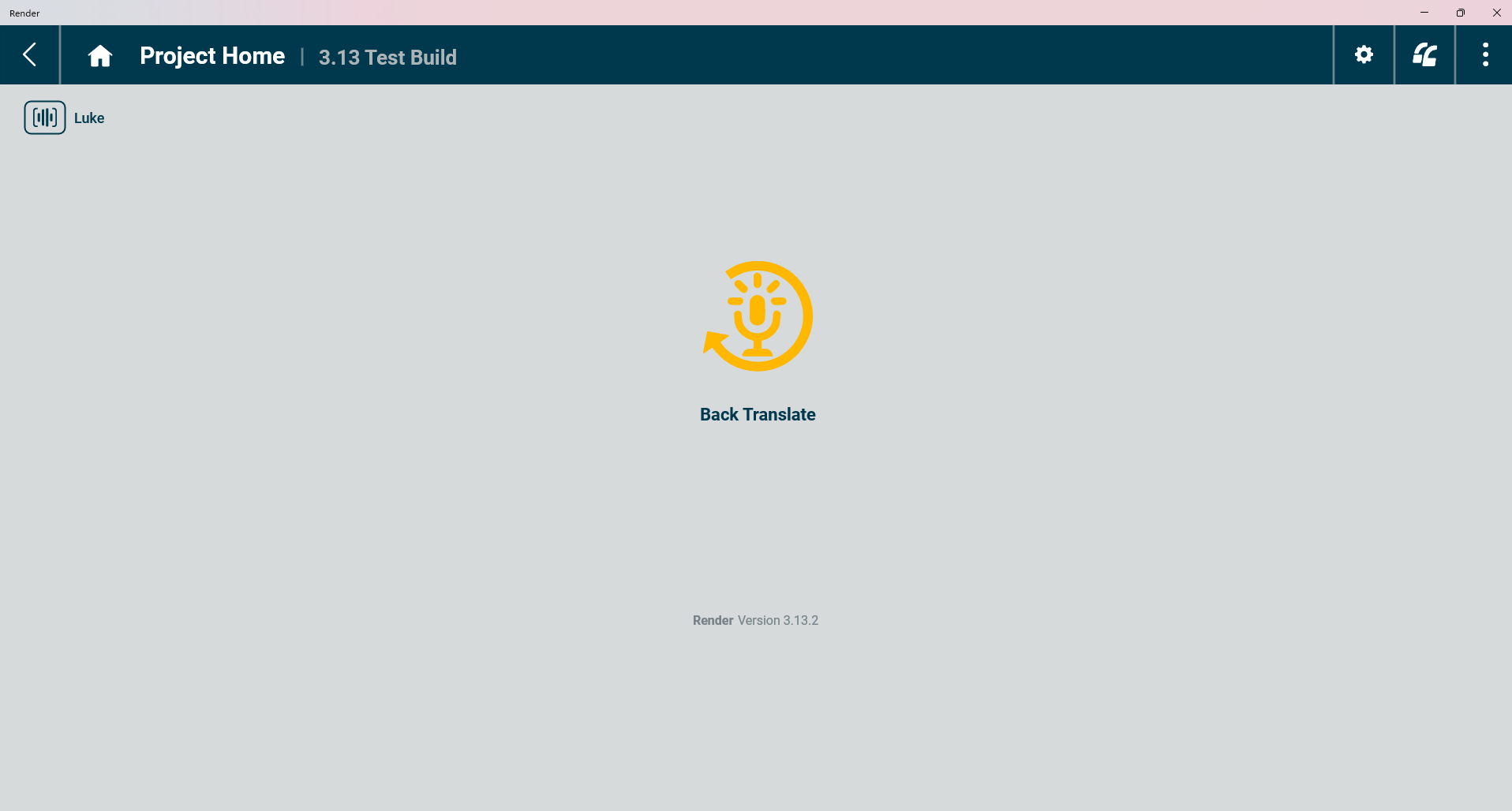
Users with Back Translation assignments will listen to the translation drafts and record the back-translation. Select the Back Translate icon from the Project Home screen to begin.
Back Translate: Passage Select
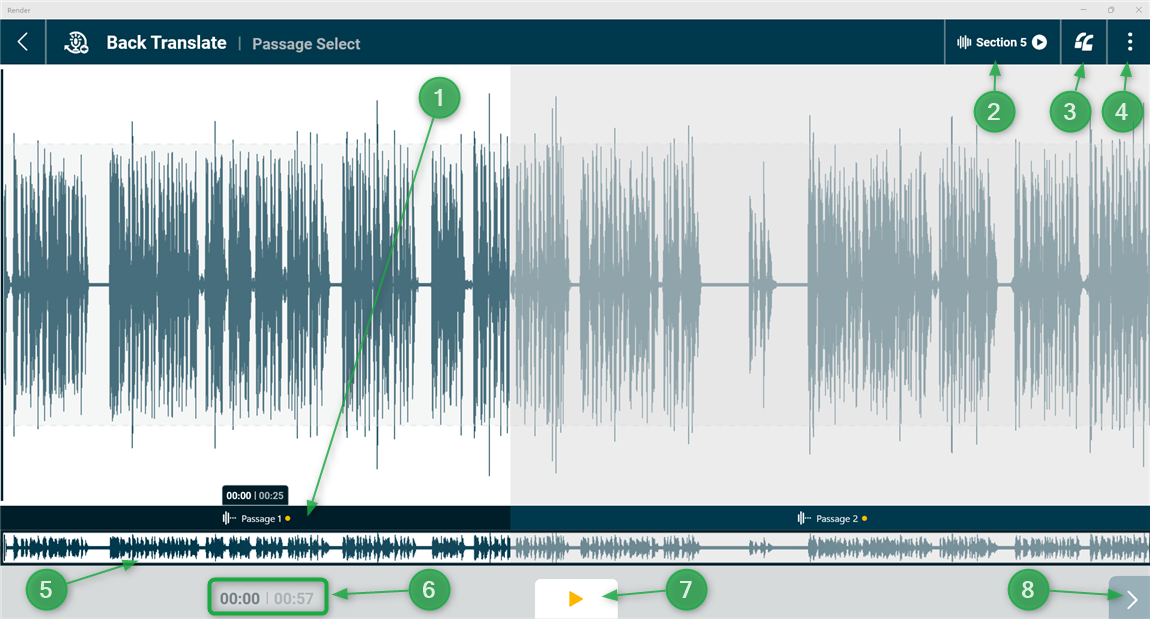
In Passage Back Translate, sections are back-translated at the passage level. The Passage Select screen shows all passages that are part of the section.
- Active passage: the active passage has a white background. Inactive passages have a grey background. Also notice Passage numbers in the dark blue bar. The yellow dot indicates the Passage has not yet been processed. Select the Next button (8) to proceed with the back-translation of this passage.
- Section #: The section # will have a play button if section titles have been recorded.
- Home: selecting this returns you to the Project Home page
- Menu: Project Home, Section Status, Export Audio, Project List, Sync, USB Sync, and Log Out
- Scroll bar/waveform: the draft waveform scroll bar is useful when the recording is long and not all passages are in view. Grab and drag the scroll bar "rectangle" to move it between the beginning and end of the Section.
- Timer: shows the total length of the recording (00:57 in this example) and the timestamp of the audio that will play if the Play button (6) is selected.
- Play: select to listen to the passage audio.
- Next: proceeds to the Passage Back Translate screen for the active passage. If only Segment Back Translate is turned on in the configuration workflow, then the Next button will take you to Segment Back Translate.
Back Translate: Passage Back Translate
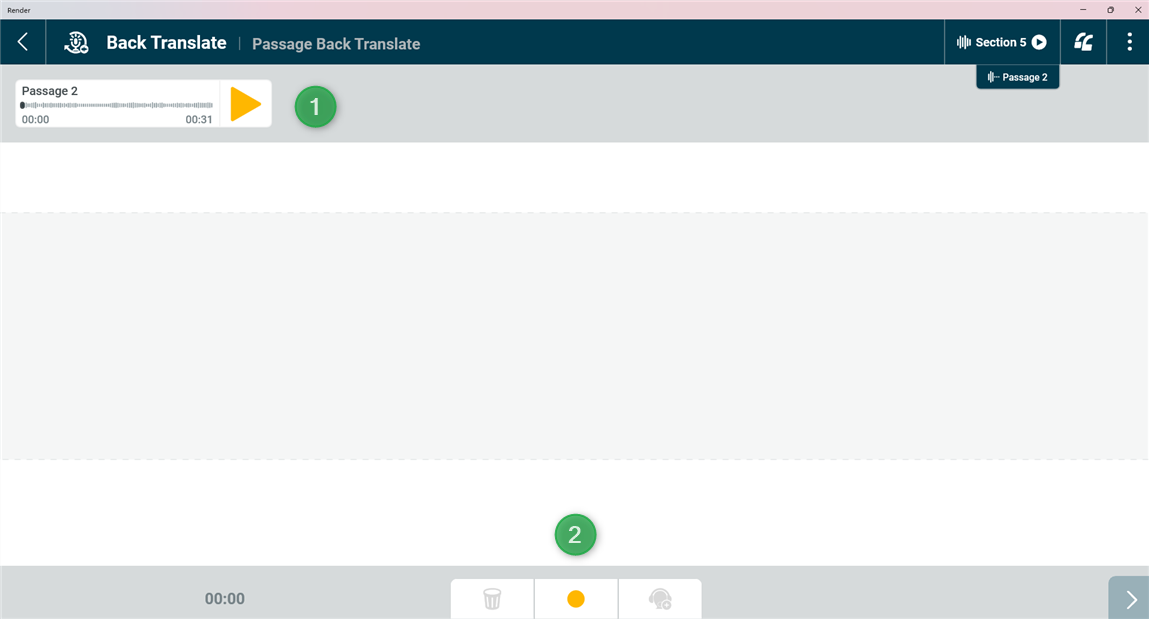
- Play: Play the passage as many times as needed to understand the content.
- Record: Record your translation of the passage into the consultant's language.
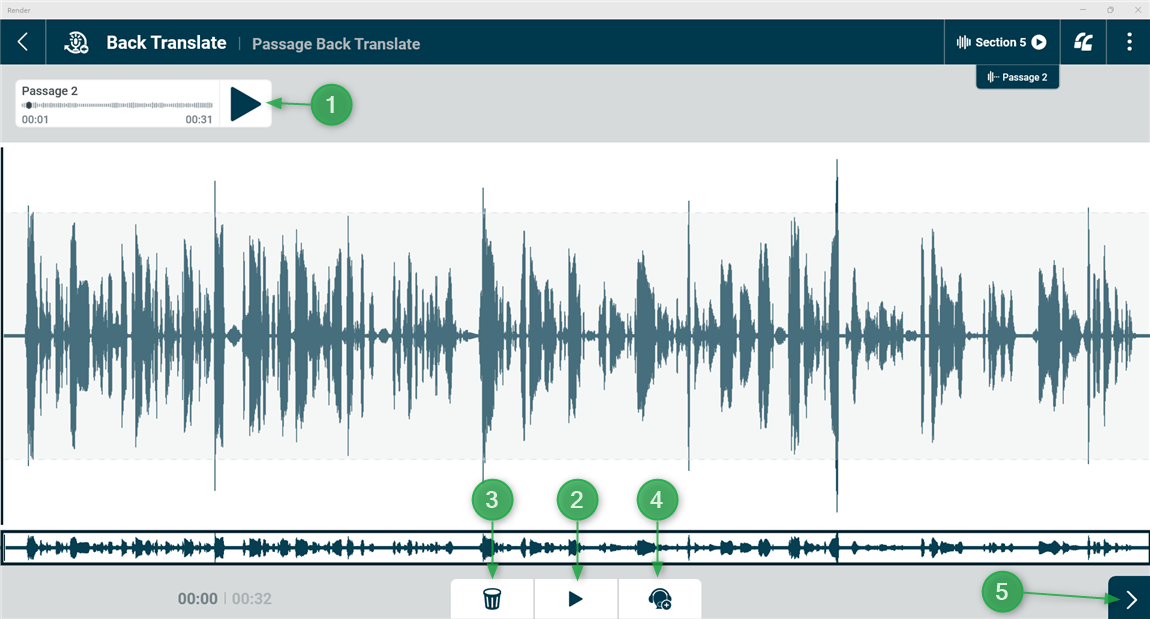 The Passage Back Translate is where the passage back translation is recorded.
- Play: select to listen to the passage that was back translated.
- Timer: shows the total length of the passage back-translation recording (00:32 in this example) and the timestamp of the cursor's location.
- Trash can: delete the back-translation recording.
- Record/Play: select to record your translation (yellow dot) or listen to your back-translation (blue play button).
- Add Note (optional): record a note that will be sent to the consultant. The note will be placed at the location of the cursor.
- Next: proceeds to the Passage Review screen.
Back Translate: Passage Review*
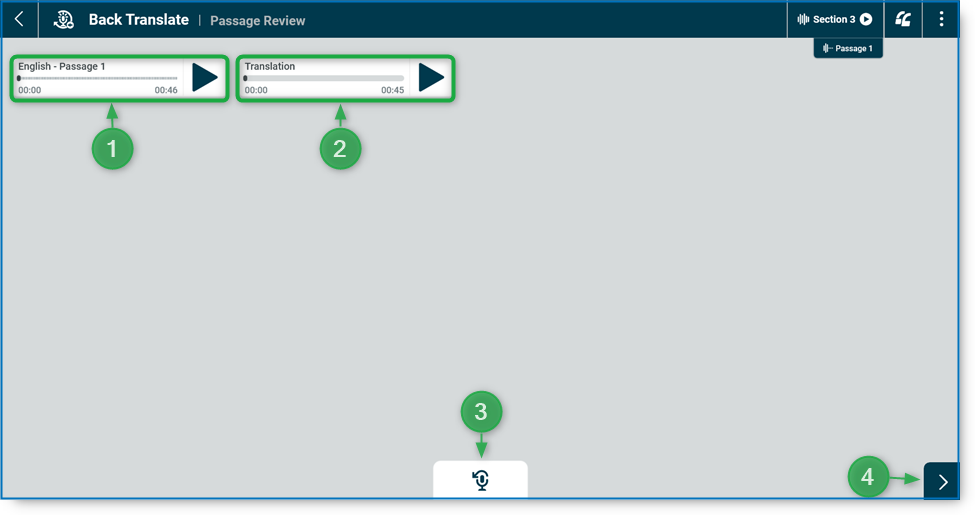
The Passage Review page allows the user to review the passage back translation before proceeding.
- Play Original Draft: select to listen to the original translation of the passage.
- Play Back-translation: select to listen to the passage back-translation.
- Re-record: returns you to the Passage Back Translate screen to edit the back-translation as needed.
- Next: returns to the Passage Select screen.
Back Translate: Segment Select*
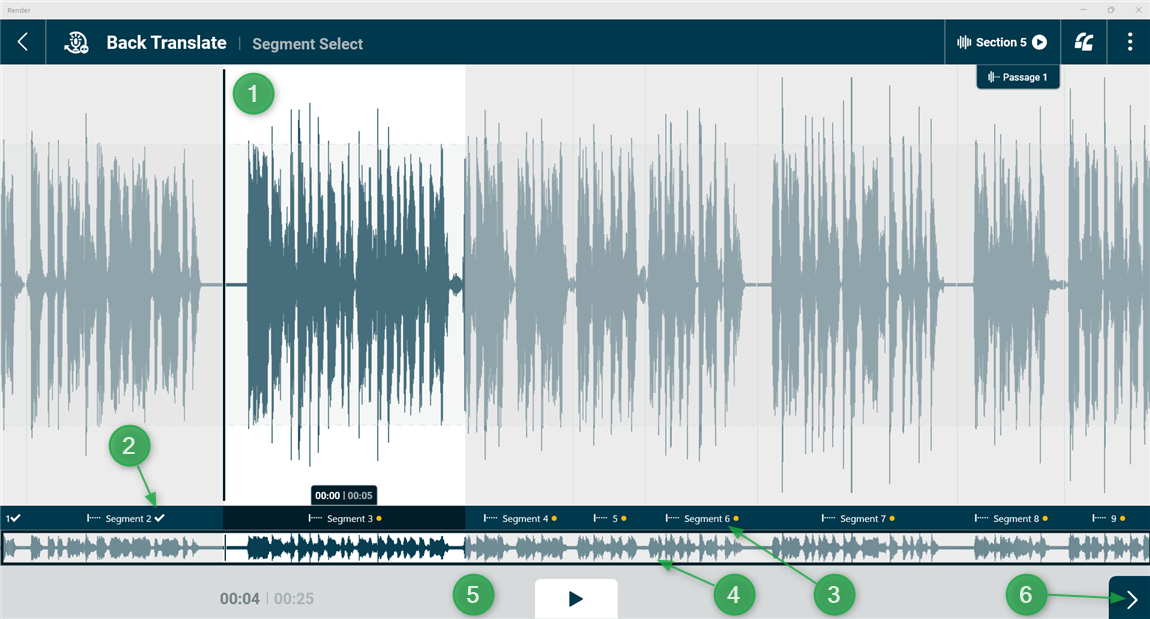
In Segment Back Translate, the drafted passage is divided into small segments that are back translated individually.
To combine segments, see the Back Translate: How to use the Segment Combine Tool article.
- Active segment: the active segment has a lighter grey background and the waveform is darker. Other segments have a darker grey background and lighter blue waveform. When you first enter the Segment Select screen, listen to the entire passage for context. Then, return to the beginning of the passage and click/tap on Segment 1. Then click/tap on the next button to begin translating from the beginning.
If, however, you have already done Passage Back Translate, then click/tap play and then pause it right away. Now you can begin translating the first Segment by clicking/tapping the Next button (6). The picture above has already had the first 2 segments translated.
2. Completed segment: a checkmark appears next to each completed segment number.
3. Numbered segments: each segment in the passage is automatically assigned a number
4. Scroll bar/waveform: this is useful when the recording is long and not all segments are in view.
5. Play: select to listen to the drafted passage.
6. Next: proceeds to the Segment Back Translate screen for the active segment (see below). If all segments have been completed, the Next button will turn into a yellow checkmark.
Back Translate: Segment Back Translate
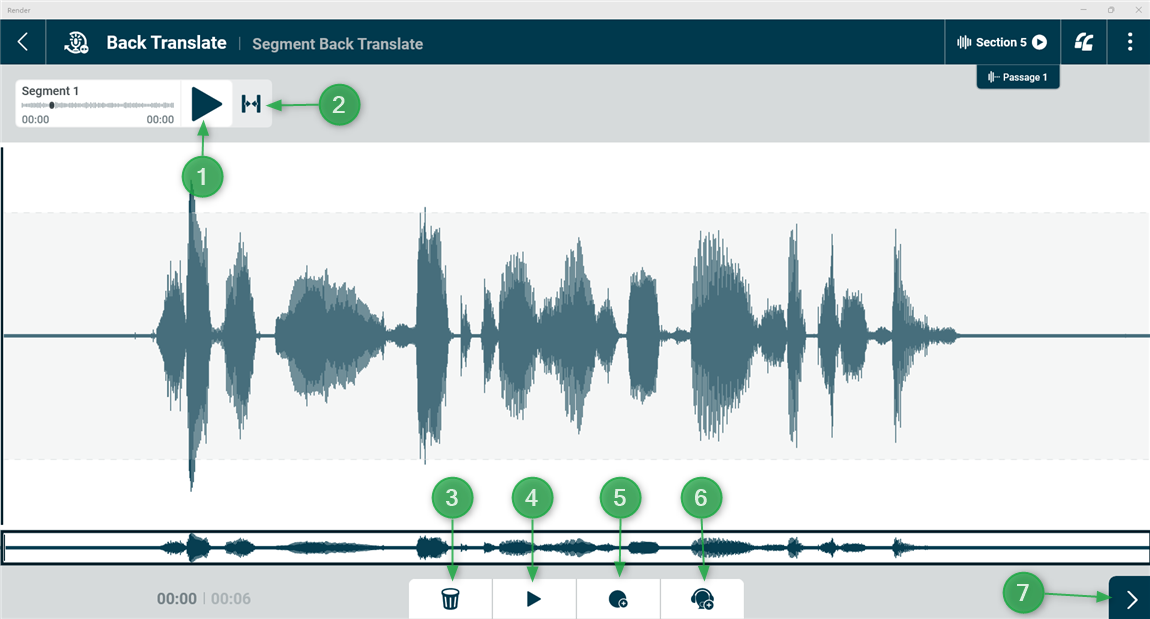
Segment Back Translate is where the segment back translation is recorded.
- Play: select to listen to the segment that needs to be back translated.
- Combine Segment tool: used to combine multiple segments. See the Back Translate: How to use the Segment Combine Tool article for additional details.
- Trash can: delete the drafted back-translation.
- Record/Play: select to record your back translation (yellow dot) or listen to your back-translation (blue play button).
- Append (optional): reactivates record button to continue adding to the back-translation draft.
- Add Note (optional): record a note that will be sent to the consultant.
- Next: proceeds to the Segment Review screen.
Back Translate: Segment Review*
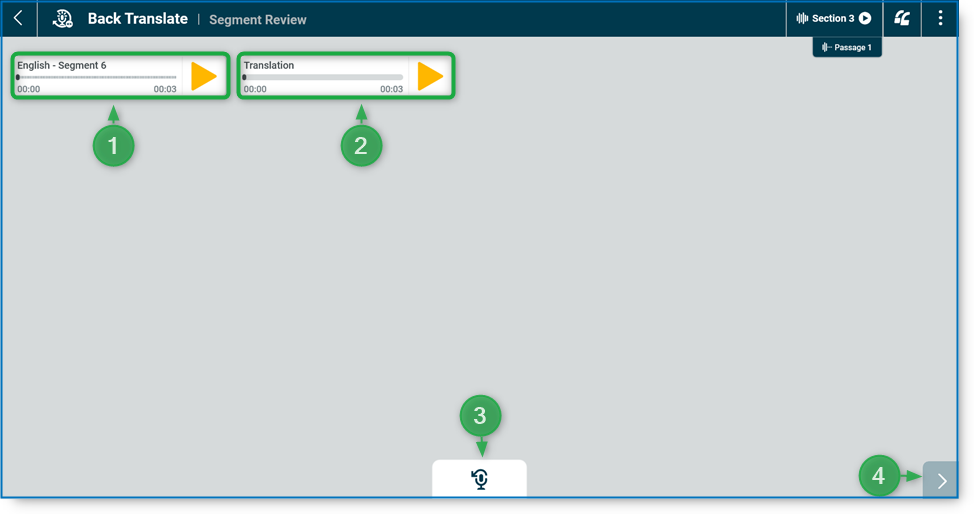
Review your segment back translation before proceeding.
- Play Original Draft: select to listen to the original translation of the segment.
- Play Back-translation: select to listen to the segment back-translation.
- Re-record: returns you to the Segment Back Translate screen to edit the back-translation as needed.
- Next: returns to the Segment Select screen.
*This can be turned off in Workflow Configuration.
Was this article helpful?
That’s Great!
Thank you for your feedback
Sorry! We couldn't be helpful
Thank you for your feedback
Feedback sent
We appreciate your effort and will try to fix the article